


Tanzania · National Park
Ngorongoro Crater
A collapsed volcano nineteen kilometres across, holding roughly two thousand large animals permanently — including black rhino, hard to find almost anywhere else in East Africa.
Overview
What Ngorongoro Crater is actually like
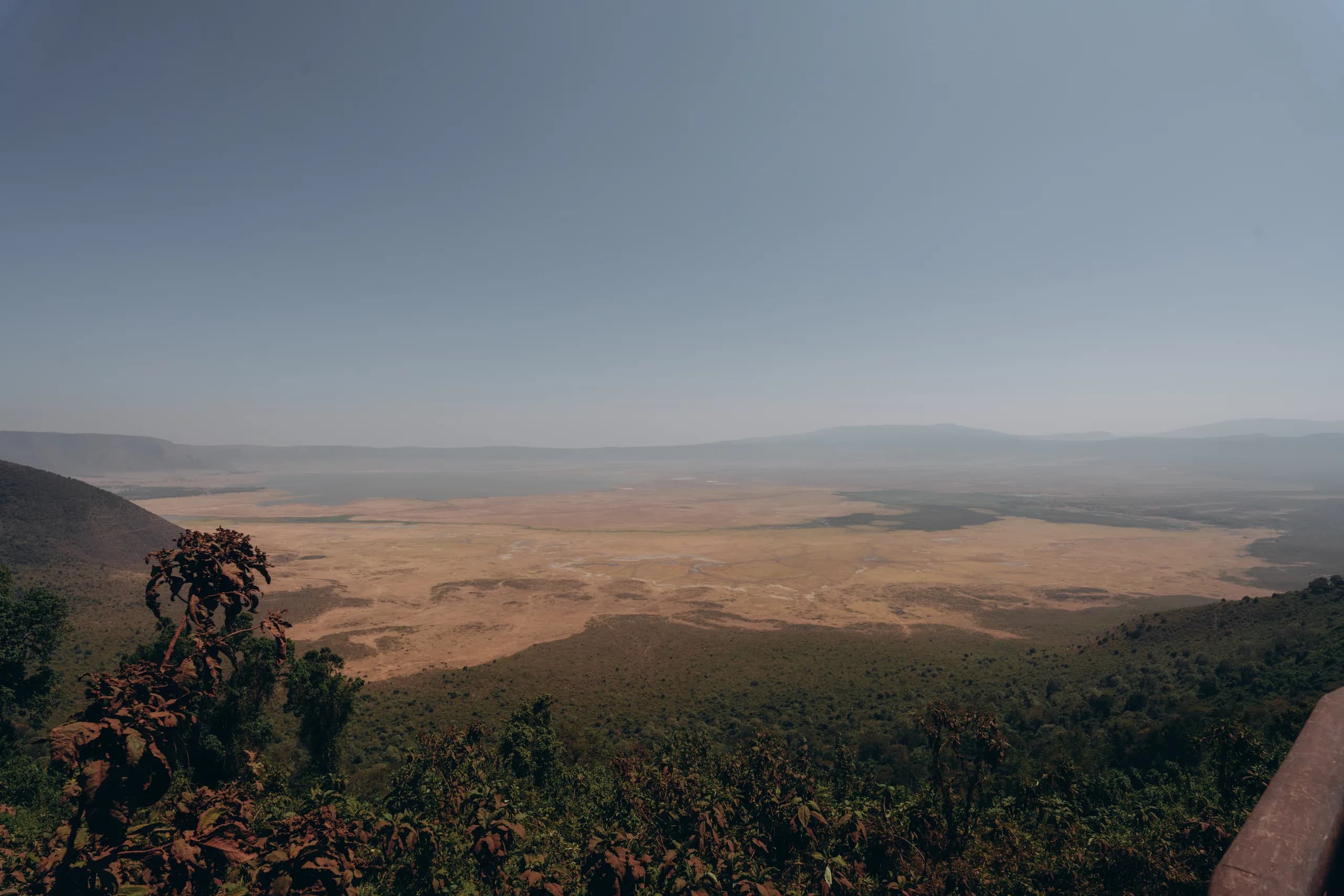
The Ngorongoro Crater is the world's largest inactive, unfilled volcanic caldera, formed when a volcano roughly the height of Kilimanjaro collapsed on itself around two and a half million years ago. What's left is a natural, walled amphitheatre 600 metres deep, with its own grassland, soda lake, forest and swamp — and animals that rarely leave, since there's little reason to climb the crater walls when the floor holds everything they need.
It sits inside the wider Ngorongoro Conservation Area, a protected multiple-land-use zone shared with Maasai pastoralist communities — one of the few places in Tanzania where people, livestock and wildlife are managed within the same boundary.
Wildlife and experiences
The crater floor is one of the most reliable places on the continent to find black rhino, alongside dense lion prides, hyena clans, and enormous buffalo herds. Elephant tend to be old bulls with heavy tusks rather than breeding herds, since cows and calves mostly stay on the conservation area's forested slopes above the crater rather than descending to the floor.
Best time to visit
Year-round, and one of the few Tanzanian parks where the season barely matters — the floor's water and grazing hold up through the dry months, and even the rains fall mostly in short afternoon bursts. Early morning descents avoid both the day's heat and the other vehicles.
Suggested duration
One full day on the crater floor, usually as a single descent rather than an overnight, since vehicles are limited to six hours inside and no camps sit on the floor itself.
Itineraries through Ngorongoro Crater
All tours
Common questions
Ngorongoro Crater, answered directly
No — camps and lodges sit on the crater rim, not the floor itself. Vehicles descend for the day (a roughly six-hour limit applies) and climb back out before dusk.
It's one of the most reliable places in East Africa for black rhino specifically, alongside the Serengeti's rarer Moru Kopjes population — the crater's contained floor and open grassland make tracking them far easier than in denser bush.
It's almost always paired with the Serengeti as the last stop before flying out of Arusha, or with Tarangire and Lake Manyara as the closing leg of a northern circuit.